

Basic Requirements To Start An Avocado Oil Business in Kenya
The demand for Avocado in the local and international markets in Kenya is on the rise and therefore investing in the Avocado processing industry in Kenya is considered as one of the most promising investment businesses. Let's discuss the basic requirements to start a Avocado business in Kenya.

1. Knowledge building
To enter the Avocado processing industry in Kenya, it is essential to research and accumulate as much knowledge as possible about the Avocado production process, as different production methods can be used, and each method has a wide range of production efficiencies.
2. Investment capital requirements
Investment in a commercial Avocado business requires between 500,000 and 2 million shillings, depending on the production capacity and the quality of the oil to be produced.
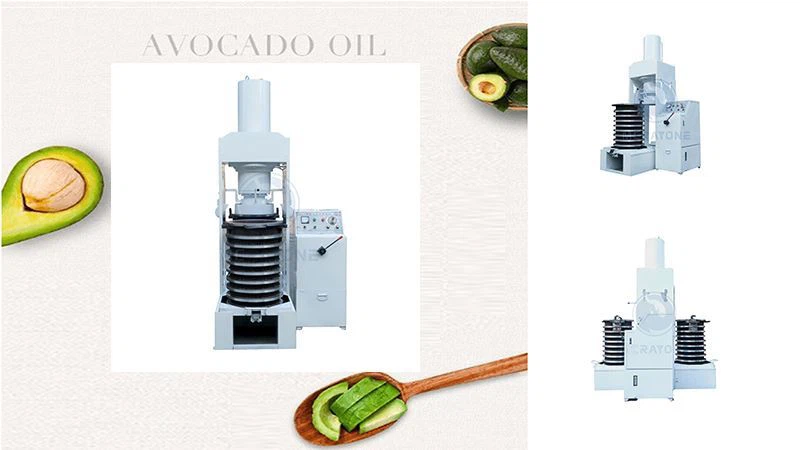
3. Processing equipment requirements
The high-end machinery required to produce extra virgin Avocado is more costly compared to secondary or tertiary oil producing machinery. Typical processing equipment costs from 800,000 to 2 million shillings, depending on production capacity. You can also consult the Kenya Agricultural and Livestock Research Organization, which sells small electric oil presses for 70,000 shillings each. Of course, you can also lease the processing equipment at an affordable price.
4. Business registration requirements
You may need to register a company to deal with established businesses, and you will need to obtain certification from the Kenya Bureau of Standards for 5,800 shillings. To produce avocado cooking oil, you will also need health certification.
In Kenya, the avocado has almost become the "national fruit", according to CTRC analysis. Kenya is now the second largest avocado producer in Africa after South Africa, and its avocado processing industry has great potential.
In Kenya, the avocado has almost become the "national fruit". Kenya is now the second largest producer of avocado in Africa, after South Africa, with an area of about 7,500 hectares under cultivation. Among them, Hass and Fuerte varieties are the best sellers.
According to the China-Africa Trade Research Center, avocados are produced commercially in seven provinces in Kenya. Seventy percent of the avocados are grown by small farmers with about 5-20 trees; 20 percent are grown by medium-sized farmers with about 100 or more trees, and 10 percent come from commercial plantations with about 10 hectares or more of planted area. About one-fifth of the annual production is exported, mainly to the European and Middle East markets.
As market demand for avocados continues to increase, so does the income of Kenyan farmers who grow avocado trees, and the industry benefits from the growing annual demand and the increasing price of avocados.
Kenya's fruit exports are reported to have climbed from nearly 39,000 tons in 2015 to about 47,000 tons in 2016, valued at about KES 5.2 billion ($52 million). The avocado is growing to be one of Kenya's major fruit exports.