

How can an oil refinery reduce its environmental footprint?
As a long - time supplier to oil refineries, I've witnessed firsthand the industry's evolving relationship with the environment. Oil refineries are significant industrial players, but they also have a considerable environmental impact. In this blog, I'll share some effective strategies that oil refineries can adopt to minimize their environmental footprint.
1. Energy Efficiency Improvements
One of the most direct ways for an oil refinery to reduce its environmental impact is by enhancing energy efficiency. Energy consumption in refineries is substantial, mainly for processes such as distillation, cracking, and heating. By implementing advanced technologies and management practices, refineries can significantly cut down on energy use.
Process Optimization
Refineries can use advanced process control systems to optimize the operation of their equipment. These systems continuously monitor and adjust process variables such as temperature, pressure, and flow rate to ensure that the refinery operates at its most efficient level. For example, by precisely controlling the temperature in a distillation column, the refinery can reduce the energy required for separation without sacrificing product quality.

Heat Recovery
Heat is a by - product of many refinery processes. Instead of wasting this heat, refineries can install heat recovery systems. These systems capture the heat from hot exhaust gases or product streams and use it to pre - heat incoming feedstocks or to generate steam for other processes. This not only reduces the need for additional energy sources but also decreases the amount of heat released into the environment.
Use of Renewable Energy
Incorporating renewable energy sources into the refinery's energy mix is another effective approach. Solar panels can be installed on the refinery's rooftops or in nearby areas to generate electricity. Wind turbines can also be used, especially in regions with strong and consistent wind resources. By using renewable energy, refineries can reduce their reliance on fossil fuels and lower their greenhouse gas emissions.
2. Waste Management
Oil refineries generate a variety of wastes, including solid wastes, wastewater, and hazardous chemicals. Proper waste management is crucial for reducing the environmental footprint.
Solid Waste Reduction
Refineries can implement waste reduction strategies at the source. For example, by using reusable packaging materials and reducing unnecessary packaging, the amount of solid waste generated can be minimized. Additionally, refineries can recycle some of their solid wastes. For instance, spent catalysts can be recycled to recover valuable metals, which can then be reused in the refinery or sold to other industries.
Wastewater Treatment
Wastewater from oil refineries contains various contaminants, such as oil, heavy metals, and organic compounds. Advanced wastewater treatment technologies should be employed to remove these contaminants before discharging the water into the environment. Biological treatment processes, such as activated sludge systems, can break down organic compounds, while physical and chemical processes, such as filtration and precipitation, can remove oil and heavy metals.
Hazardous Chemical Management
Hazardous chemicals used in refinery processes need to be carefully managed. Refineries should store these chemicals in proper containers and facilities to prevent leaks and spills. In case of a spill, quick response plans should be in place to minimize the environmental impact. Moreover, refineries can explore the use of less hazardous chemicals in their processes to reduce the risk of environmental contamination.
3. Emission Control
Air emissions from oil refineries, including sulfur dioxide, nitrogen oxides, and particulate matter, contribute to air pollution and have a negative impact on human health and the environment.
Flue Gas Desulfurization
Sulfur dioxide emissions can be reduced through flue gas desulfurization (FGD) systems. These systems remove sulfur dioxide from the exhaust gases by reacting it with a sorbent, such as limestone or lime. The resulting product can be disposed of safely or used in other industries, such as the construction industry.
Selective Catalytic Reduction
To reduce nitrogen oxide emissions, refineries can install selective catalytic reduction (SCR) systems. These systems use a catalyst to convert nitrogen oxides into nitrogen and water vapor in the presence of a reducing agent, such as ammonia. SCR systems can achieve high removal efficiencies, significantly reducing the refinery's nitrogen oxide emissions.
Particulate Matter Control
Particulate matter emissions can be controlled using various technologies, such as electrostatic precipitators and baghouses. Electrostatic precipitators use an electrostatic charge to remove particulate matter from the gas stream, while baghouses use fabric filters to capture the particles.
4. Water Conservation
Water is a precious resource, and oil refineries consume large amounts of it. By implementing water conservation measures, refineries can reduce their water footprint.
Water Reuse
Refineries can reuse treated wastewater for non - critical processes, such as cooling or washing. This reduces the demand for fresh water and also decreases the amount of wastewater discharged into the environment. Additionally, water can be recycled within the refinery's processes. For example, cooling water can be treated and reused instead of being continuously replaced.
Leak Detection and Repair
Regularly checking for and repairing leaks in water pipes and equipment is essential for water conservation. Even small leaks can result in significant water losses over time. Refineries can use advanced leak detection technologies, such as acoustic sensors and infrared cameras, to quickly identify and fix leaks.
5. Use of Advanced Equipment
Investing in advanced refinery equipment can also contribute to reducing the environmental footprint.
High - Efficiency Refining Machines
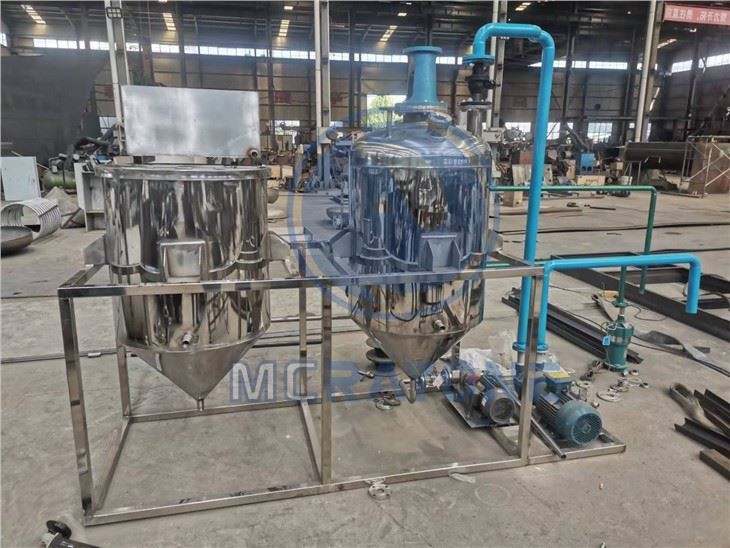
Modern refining machines are designed to be more energy - efficient and produce fewer emissions. For example, the Edible Oil Decoloration machine uses advanced decoloration techniques that require less energy and chemicals compared to traditional methods. Similarly, the Soybean Oil Refining Machine and Palm Oil Refinery Machine are designed to optimize the refining process, reducing waste and improving product quality.
Low - Emission Equipment
Refineries can also replace old and high - emission equipment with new, low - emission models. For example, low - NOx burners can be installed in furnaces to reduce nitrogen oxide emissions. These burners use advanced combustion technologies to achieve more complete combustion and lower emissions.
Conclusion
Reducing the environmental footprint of an oil refinery is a complex but achievable goal. By implementing energy efficiency improvements, proper waste management, emission control measures, water conservation strategies, and using advanced equipment, refineries can significantly reduce their impact on the environment.
As a supplier to oil refineries, I'm committed to providing the latest and most environmentally friendly technologies and equipment. If you're an oil refinery looking to reduce your environmental footprint, I invite you to reach out to me for more information and to discuss potential procurement opportunities. Let's work together to create a more sustainable future for the oil refining industry.
References
- "Handbook of Petroleum Refining Processes" by Robert A. Meyers
- "Environmental Management in the Oil and Gas Industry" by John A. Mathews
- Journal articles on energy efficiency, waste management, and emission control in oil refineries from scientific databases such as ScienceDirect and SpringerLink.