
Refining by-Products—Saponin
Refining by-Products—Saponin(Take peanut oil as an example)
Why peanut oil should be refined:
Due to the existence of some moldy raw materials, the mycotoxins in the crude oil can greatly exceed the standard. For example, peanut oil is easily contaminated by aflatoxins, and the aflatoxin content is sometimes as high as 1000-10000ug/kg.Therefore, the pressed peanut oil needs to be refined before it can be eaten.Aflatoxin is a highly toxic substance, and its toxicity is higher than potassium cyanide. It is the strongest chemical carcinogen discovered so far. After humans eat food contaminated with aflatoxin, the incidence of liver cancer increases. Many aflatoxins can be associated with hepatitis B. Viruses synergistically induce hepatocellular carcinoma.Aflatoxin is heat-resistant and is not easily destroyed at the temperature of general cooking and processing. Aflatoxin can be adsorbed by saponin, activated clay, activated carbon, etc., degraded by ultraviolet light of a certain wavelength, and can also be destroyed in high temperature treatments such as deodorization. , so the oil can be refined to remove this toxin.
Production of Saponins:
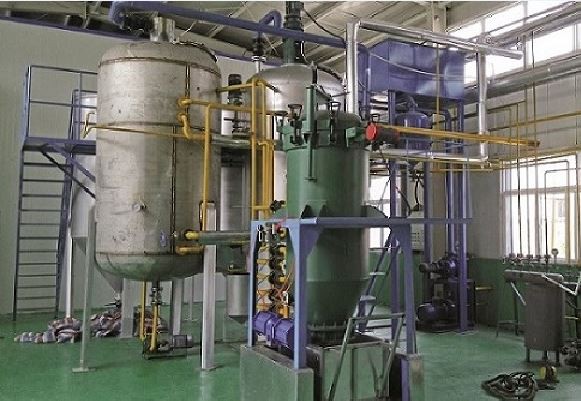
The (clean) peanut oil is filtered and refined at a low temperature, which maximizes the retention of the nutrients, physiologically active ingredients and unique flavor of peanuts, and can keep the oil clear and transparent for a long time.There is no waste discharge and no saponin generation in the whole production process. It is an environmentally friendly green processing technology; the PH value of unclean and mildewed peanut oil is below 5, and it will change to 6 after standing, refining and adding caustic soda, after neutralization of acid and alkali, it becomes 7-7.15 (standard value), refining A small amount of saponin will be removed later.A small amount of saponin will be excluded after refining.Saponin and waste are harmless to the human body.
Derivatives of saponin: Using specialized processing equipment, it is mainly used in the manufacture of soaps, synthetic detergents, protective and decorative coatings, greases, waterproof preservatives, cosmetics, pharmaceutical preparations and other derivative products. (For refining below 5T/h, it is not recommended to specially deal with saponins)