

How does an oil mill machine work?
An oil mill machine is a crucial piece of equipment in the oil extraction industry, which plays a significant role in converting oil - bearing seeds and nuts into high - quality edible or industrial oils. As a professional oil mill machine supplier, I am delighted to share with you how an oil mill machine works.
1. Pre - treatment of Raw Materials
The first step in the oil extraction process is the pre - treatment of raw materials. Different types of oil - bearing materials such as soybeans, peanuts, sunflower seeds, etc., require specific pre - treatment methods.
Cleaning
Raw materials often contain impurities like dirt, stones, and broken seeds. Cleaning is essential to ensure the quality of the final oil product and protect the oil mill machine from damage. For example, a vibrating screen can be used to separate large impurities from the oil - bearing seeds. This simple yet effective method helps in getting rid of the debris that could otherwise affect the subsequent processes.
Dehulling
Some oil - bearing materials, like peanuts and soybeans, have hulls that need to be removed. Dehulling not only increases the oil yield but also improves the quality of the oil. Specialized dehulling machines are used for this purpose. These machines use friction or impact to separate the hulls from the kernels. After dehulling, the kernels are more suitable for the next step of oil extraction.
Conditioning
Conditioning involves adjusting the moisture content and temperature of the oil - bearing materials. For instance, when processing peanuts, the ideal moisture content for efficient oil extraction is around 8 - 10%. By heating and adding or removing moisture, the structure of the oil - bearing cells in the seeds is optimized, making it easier to extract the oil.

2. Oil Extraction
There are two main methods of oil extraction: mechanical pressing and solvent extraction.
Mechanical Pressing
Mechanical pressing is a traditional and widely used method of oil extraction. It works by applying physical pressure to the oil - bearing materials to squeeze out the oil.
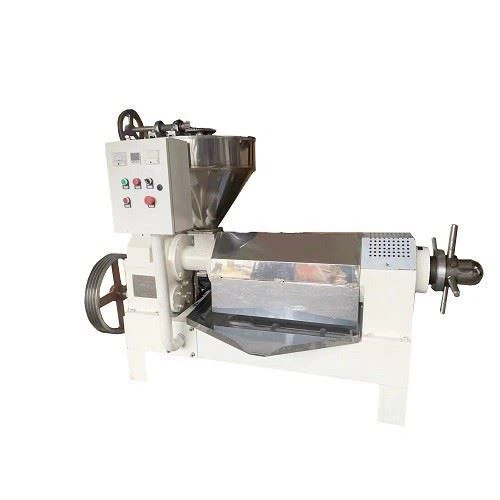
- Screw Pressing: Screw presses are the most common type of mechanical oil presses. In a screw press, the oil - bearing materials are fed into the hopper and then conveyed through a series of rotating screws. As the screws rotate, they gradually compress the materials, increasing the pressure. The oil is squeezed out through small gaps in the barrel and collected in a container below. For example, our Auto - temperature Control Peanut Oil Press Machine is equipped with advanced temperature control technology. This feature allows for precise adjustment of the pressing temperature, which is crucial for maintaining the quality of the oil and improving the oil yield.
- Hydraulic Pressing: Hydraulic presses use hydraulic pressure to compress the oil - bearing materials. The materials are placed in a chamber, and a hydraulic piston applies pressure. Hydraulic presses are known for their high - pressure capabilities and are often used for small - scale production or for extracting oil from high - value materials.
Solvent Extraction
Solvent extraction is a more efficient method for large - scale oil production. It works by using a solvent, usually hexane, to dissolve the oil from the oil - bearing materials.
- Process: The pre - treated oil - bearing materials are placed in an extraction vessel, and the solvent is added. The solvent dissolves the oil, forming a miscella (a mixture of oil and solvent). The miscella is then separated from the solid residue and sent to a distillation unit. In the distillation unit, the solvent is evaporated and recovered for reuse, leaving behind the crude oil.
- Advantages and Disadvantages: Solvent extraction can achieve a higher oil yield compared to mechanical pressing. However, it requires more complex equipment and strict safety measures due to the use of flammable solvents.
3. Oil Filtration
After the oil is extracted, it usually contains impurities such as solid particles, gums, and moisture. Filtration is necessary to remove these impurities and obtain clear and pure oil.
- Plate and Frame Filters: Plate and frame filters are commonly used in the oil filtration process. The crude oil is pumped into the filter, where it passes through a series of filter plates and frames. The filter plates are covered with filter cloths that trap the solid impurities, allowing the clean oil to pass through.
- Centrifugal Filtration: Centrifugal filters use centrifugal force to separate the impurities from the oil. The oil is fed into a rotating drum, and the centrifugal force causes the heavier impurities to settle at the bottom of the drum, while the clean oil is collected from the top. Our Soybean Oil Filter is designed to provide efficient and reliable filtration for soybean oil, ensuring the high quality of the final product.
4. Oil Refining
Crude oil obtained from the extraction process may contain various impurities and unwanted substances, such as free fatty acids, pigments, and odorous compounds. Oil refining is the process of removing these impurities to improve the quality, stability, and taste of the oil.
Degumming
Degumming is the first step in oil refining. It involves removing the phospholipids (gums) from the crude oil. Phospholipids can cause the oil to become cloudy and affect its stability. By adding water or acid to the crude oil, the phospholipids are hydrated and can be separated from the oil by centrifugation.
Neutralization
Neutralization is used to remove free fatty acids from the oil. An alkaline solution, usually sodium hydroxide, is added to the oil. The free fatty acids react with the alkali to form soap, which can be separated from the oil by settling or centrifugation.
Bleaching
Bleaching is the process of removing pigments and other impurities from the oil. The oil is treated with bleaching earth or activated carbon, which adsorbs the pigments and other colored substances. After bleaching, the oil becomes lighter in color and more suitable for further processing.
Deodorization
Deodorization is the final step in oil refining. It involves removing the odorous compounds from the oil by steam distillation under vacuum conditions. The high - temperature steam strips away the volatile odorous compounds, leaving behind a odorless and stable oil product.
5. Specific Examples of Oil Mill Machines for Different Materials
- Sunflower Seed Oil Press For Feed Production: Sunflower seeds are rich in oil and are widely used for oil production. Our Sunflower Seed Oil Press For Feed Production is specifically designed to extract oil from sunflower seeds efficiently. It can handle large - scale production and is suitable for both edible oil production and feed production. The press is equipped with advanced technology to ensure high oil yield and good quality of the extracted oil.
Conclusion
Understanding how an oil mill machine works is essential for anyone involved in the oil extraction industry. Whether you are a small - scale farmer looking to extract oil from your own crops or a large - scale oil producer, choosing the right oil mill machine and following the correct processing steps can significantly improve the efficiency and quality of oil production.
As a leading oil mill machine supplier, we are committed to providing high - quality oil mill machines and comprehensive technical support. Our machines are designed with the latest technology and high - quality materials to ensure reliable performance and long - term durability. If you are interested in our oil mill machines or have any questions about oil extraction, please feel free to contact us for procurement and further discussion. We look forward to working with you to achieve your oil production goals.
References
- Flick, G. J. (2002). Handbook of edible oils: processing technology, quality control, and nutritional implications. CRC Press.
- Erickson, D. R. (1995). Practical handbook of soybean processing and utilization. American Oil Chemists' Society.