

What is the significance of cracking in an oil refinery?
Cracking is a fundamental process in an oil refinery, playing a pivotal role in transforming heavy hydrocarbon fractions into more valuable and versatile products. As a supplier to oil refineries, I have witnessed firsthand the far - reaching significance of this process. In this blog, I will delve into the various aspects of cracking and explain why it is so crucial in the oil refining industry.
1. Understanding Cracking in an Oil Refinery
Cracking is a chemical process that breaks down large, complex hydrocarbon molecules into smaller, simpler ones. In an oil refinery, the feedstock often consists of heavy crude oil fractions, which contain long - chain hydrocarbons. These long - chain hydrocarbons have high boiling points and are less useful in their raw form. Through cracking, these large molecules are broken into smaller alkanes, alkenes, and other hydrocarbons with lower boiling points.
There are two main types of cracking: thermal cracking and catalytic cracking. Thermal cracking involves heating the hydrocarbon feedstock to high temperatures (up to 1000°C) in the absence of a catalyst. This process breaks the carbon - carbon bonds in the large hydrocarbon molecules. Catalytic cracking, on the other hand, uses a catalyst to lower the activation energy required for the reaction, allowing the cracking to occur at lower temperatures (around 450 - 550°C).
2. Meeting Market Demand for Light Hydrocarbons
One of the most significant aspects of cracking is its ability to meet the market demand for light hydrocarbons. The modern world has a high demand for products such as gasoline, diesel, and jet fuel, which are composed of relatively short - chain hydrocarbons. Crude oil, however, contains a large proportion of heavy hydrocarbons that are not suitable for direct use in these fuels.
By cracking heavy hydrocarbons, refineries can produce more gasoline, diesel, and other light - end products. For example, the demand for gasoline is constantly increasing due to the growing number of vehicles on the road. Cracking helps refineries to convert heavy fractions like gas oil into gasoline - range hydrocarbons, ensuring a stable supply of this essential fuel.
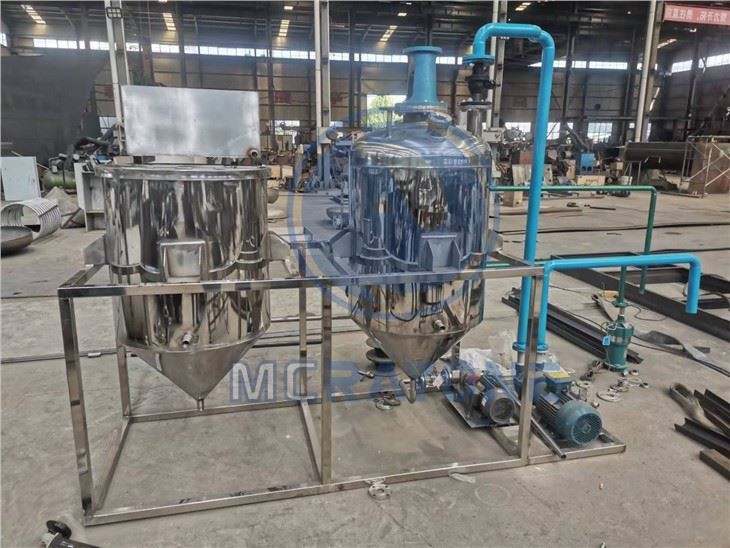
As an oil refinery supplier, I understand the importance of providing equipment that can efficiently carry out the cracking process to meet these market demands. Our Palm Fruit Oil Refinery And Fractionation Equipment is designed to handle different types of feedstocks and optimize the cracking process, enabling refineries to produce high - quality light hydrocarbons.
3. Producing Petrochemical Feedstocks
Cracking is also a key process for producing petrochemical feedstocks. Alkenes, such as ethylene and propylene, are important building blocks for the petrochemical industry. These compounds are used in the production of plastics, synthetic fibers, rubber, and a wide range of other chemical products.
During the cracking process, especially in catalytic cracking, a significant amount of alkenes are produced. For instance, ethylene is one of the most widely used petrochemicals, and it is primarily produced through the cracking of ethane, propane, and naphtha. The availability of these petrochemical feedstocks is essential for the growth and development of the chemical industry.
Our cooking oil refinery machine can be customized to produce petrochemical feedstocks efficiently. By adjusting the cracking conditions and using appropriate catalysts, refineries can maximize the yield of alkenes and other valuable petrochemicals.
4. Improving Refinery Efficiency and Economics
Cracking improves the overall efficiency and economics of an oil refinery. Heavy hydrocarbon fractions have lower market value compared to light fractions. By converting these heavy fractions into more valuable products, refineries can increase their profitability.
Moreover, cracking allows refineries to make better use of their feedstock. Instead of simply selling heavy fractions at a low price, refineries can crack them into high - value products, reducing waste and increasing the overall yield of valuable products from a given amount of crude oil.
For example, a refinery that invests in advanced cracking technology can produce more gasoline and diesel from a barrel of crude oil, which means higher revenues. Our Palm Oil Refinery Machine is designed to enhance the cracking efficiency, reducing energy consumption and operating costs while increasing the production of high - value products.
5. Environmental Considerations
In recent years, environmental concerns have become increasingly important in the oil refining industry. Cracking can play a role in reducing the environmental impact of refineries. By producing lighter hydrocarbons, refineries can produce cleaner - burning fuels. For example, gasoline and diesel produced from cracked hydrocarbons have lower sulfur and nitrogen content, which reduces emissions of pollutants such as sulfur dioxide and nitrogen oxides when these fuels are burned.
Additionally, the production of petrochemical feedstocks through cracking can lead to the development of more sustainable materials. For instance, some plastics made from petrochemicals can be recycled, reducing the amount of waste in the environment.

6. Technological Advancements in Cracking
The cracking process has seen significant technological advancements over the years. New catalysts are being developed to improve the selectivity and efficiency of the cracking reaction. For example, zeolite - based catalysts have been widely used in catalytic cracking due to their high activity and selectivity.
Advanced reactor designs are also being introduced to optimize the cracking process. These reactors can provide better control of temperature, pressure, and residence time, leading to higher yields of desired products. As a supplier, we are constantly working on improving our equipment to incorporate these technological advancements, ensuring that our customers can benefit from the latest cracking technologies.
7. Challenges in Cracking
Despite its many benefits, cracking also faces some challenges. One of the main challenges is the formation of coke during the cracking process. Coke is a solid carbonaceous material that can deposit on the catalyst surface, reducing its activity and lifespan. Refineries need to develop strategies to minimize coke formation, such as using appropriate catalysts and operating conditions.
Another challenge is the energy consumption of the cracking process. Both thermal and catalytic cracking require a significant amount of energy, mainly in the form of heat. Refineries are constantly looking for ways to reduce energy consumption, such as using waste heat recovery systems and improving the insulation of reactors.
8. Conclusion and Call to Action
In conclusion, cracking is a vital process in an oil refinery with far - reaching significance. It helps meet market demand for light hydrocarbons, produces petrochemical feedstocks, improves refinery efficiency and economics, and has positive environmental implications. As a supplier to oil refineries, we are committed to providing high - quality equipment and solutions for the cracking process.
If you are in the oil refining industry and are looking for reliable equipment for your cracking process, we invite you to contact us for a detailed discussion. Our team of experts can provide you with customized solutions based on your specific needs and requirements. Let's work together to optimize your refinery operations and achieve greater success in the market.
References
- Gary, J. H., Handwerk, G. E., & Kaiser, M. J. (2007). Petroleum Refining Technology and Economics. CRC Press.
- Speight, J. G. (2014). The Chemistry and Technology of Petroleum. CRC Press.
- Meyers, R. A. (2004). Handbook of Petroleum Refining Processes. McGraw - Hill.