

Understanding How A Soybean Oil Extraction Machine Operates
Image Source: pexels
Have you ever thought about how a soybean oil extraction machine works? Soybean oil is very important in the world. It makes up almost 29% of all vegetable oil made each year. Many factories use soybean oil. Its yearly production is the second highest in the world. Learning how these machines work gives you useful knowledge. This can help you make safe choices. It can also help you work better and follow environmental rules. Look at the table below to see why knowing the process is important:
|
Aspect |
Explanation |
|---|---|
|
Efficiency |
Knowing the best extraction methods helps plants work better. |
|
Safety |
Handling chemicals like hexane safely keeps workers safe. |
|
Environmental Compliance |
Using the right systems lowers solvent loss and helps meet environmental rules. |
Key Takeaways
-
Learning how soybean oil extraction works helps factories do better. Using good methods can make more oil and improve its quality.
-
Steps like cleaning and taking out stones are very important. They help the machine work well and make better oil.
-
Mechanical pressing keeps more nutrients and taste in the oil. This method is good for people who want high quality oil.
-
Solvent extraction gets the most oil but uses chemicals. Workers must follow safety rules to stay safe.
-
New machines make oil extraction faster and better. They use smart technology to save power and help the environment.
Soybean Oil Extraction Machine Basics

Image Source: pexels
Main Components
A soybean oil extraction machine helps get oil from soybeans. It does this in a safe and fast way. The machine has many important parts. Each part does something special. Check the table below to see what each part does:
|
Function/Component |
Description |
|---|---|
|
Oil Extraction Methods |
Mechanical pressing and solvent extraction are used to extract oil from soybeans. |
|
Optimization |
The machine is designed to maximize oil yield while ensuring the quality of the extracted oil. |
|
Main Components |
Includes a hopper, screw press, gear reduction unit, slots/screens, and a frame. |
|
Additional Features |
Electric motor, pressing drum, oil outlet, cake outlet, pulleys, transmission belts, bearings. |
The hopper holds soybeans before they go into the machine. The screw press moves the soybeans through the machine. Oil comes out through the oil outlet. The cake outlet lets out the leftover soybean meal. The electric motor makes the machine work.
Tip: Take care of these parts often. This keeps your soybean oil extraction machine working well and stops problems.
Pre-Treatment Steps
You need to get soybeans ready before you take out the oil. These steps help the process work better and make the oil good. Here are the main steps:
- Cleaning: You take out dust, straw, stones, and iron using cleaning sieves and magnetic separators.
- De-stoning: A de-stoner removes stones that can hurt the machine and lower oil quality.
- Crushing: You crush soybeans to make them smaller and easier to use.
- Flaking: You flatten the crushed soybeans so it is easier to get oil out.
- Cooking: You heat the soybeans to help get more oil.
These steps help you get the most oil from your soybean oil extraction machine. Cleaning and de-stoning are very important. They keep your machine safe and help you get good oil. If you skip these steps, you might get less oil and break the machine.
Note: Good pre-treatment helps your soybean oil extraction machine work better and gives you better oil.
Soybean Oil Extraction Process
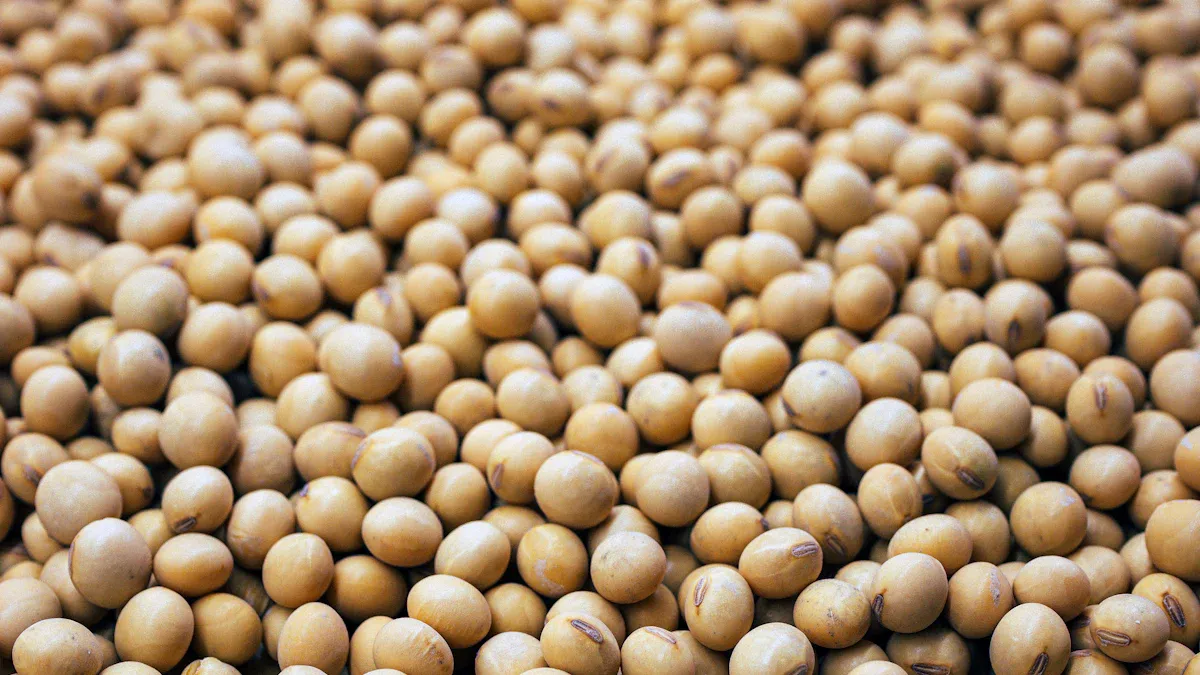
Image Source: unsplash
You can use two main ways to get soybean oil. Each way works differently and gives different results. You should know how both ways work. This helps you pick the best one for you.
Mechanical Pressing Method
Mechanical pressing uses force to get oil from soybeans. An oil press crushes and presses the beans. This way does not use chemicals. The oil keeps more nutrients and flavor.
Here are the steps for mechanical pressing:
-
Clean soybeans with screens, destoners, and magnets. This removes dirt and stones.
-
Crush soybeans in a crusher. This makes them easier to press.
-
Change the moisture and heat in a conditioning pot.
-
Use flaking rolls to make thin flakes.
-
Roast the flakes. This sets the right water and heat.
-
Put the cooked flakes in the oil press. The press squeezes out the oil.
-
Filter the oil. This takes out small bits.
The oil has lots of vitamin E and a strong smell. The oil press keeps the natural taste and nutrients. You do not need to worry about leftover solvent. But this way gives less oil than solvent extraction.
|
Criteria |
Mechanical Pressing |
Solvent Extraction |
|---|---|---|
|
Oil Recovery Rate (%) |
65–75% |
95–98% |
|
Criteria |
Mechanical Pressing |
Solvent Extraction |
|---|---|---|
|
Oil Recovery Rate (%) |
65–75% |
95–98% |
Tip: Use mechanical pressing if you want oil with more flavor and nutrients. If you want more oil, try another way.
Solvent Extraction Method
Solvent extraction uses chemicals to get oil from soybeans. A soybean oil extraction machine mixes beans with a solvent, often hexane. This way gets almost all the oil from the beans.
Solvent extraction has three main steps:
- Leaching: Soak soybean flakes in a solvent. The solvent pulls oil out. You can use immersion or spraying.
- Dissolving: Treat the wet meal to get back the solvent and lower moisture. Steam helps remove the solvent safely.
- Evaporation: Heat the mix to make the solvent turn to gas. Collect the crude oil at the end.
Here is how the two ways are different:
-
Mechanical pressing keeps out solvent and keeps more vitamin E.
-
Solvent extraction gets more oil, up to 99%, but may leave some solvent in the oil.
-
Pressed oil keeps more nutrients and smells stronger.
-
Solvent-extracted oil may lose some natural antioxidants and flavor.
|
Solvent Type |
Description |
Safety and Environmental Considerations |
|---|---|---|
|
Hexane |
A common solvent used for oil extraction because it mixes well with oil. |
Can get into the air, make ozone, and hurt people if breathed in. |
|
Water |
Used in aqueous extraction, making an emulsion with oil. |
Avoids chemical safety and environmental problems, and gets more oil. |
You must think about safety when using solvents. Breathing in hexane can hurt your nervous system. Some animals got sick from eating meals with leftover hexane. Many factories now look for safer choices instead of hexane.
Note: Solvent extraction is best for big factories. You get more oil, but you must be careful with solvents.
Comparing the Two Methods
Here is how the two ways compare:
-
Mechanical pressing uses an oil press and no chemicals.
-
Solvent extraction uses a soybean oil extraction machine and solvents like hexane.
-
Mechanical pressing gives less oil but keeps more nutrients.
-
Solvent extraction gives more oil but may leave some solvent.
-
Mechanical pressing costs less and is good for small or medium factories.
-
Solvent extraction costs more and is better for big factories.
Advanced Technologies in Soybean Oil Extraction
Modern soybean oil extraction machines use new technology to work better. Flaking makes the soybeans have more surface area. This helps you get more oil. Good dehulling stops membranes from blocking the solvent. The best flake thickness is 0.3-0.4 mm. This thickness helps balance how well the solvent moves and stops too much powder.
Expanded flakes let the solvent move faster through the meal. This leaves less oil in the meal and makes the recovery system work less.
Tip: To get more oil and save money, use new technology like diffusion and wet penetration in your soybean oil extraction machine.
Refining and Final Processing
Oil Refining Steps
After you get soybean oil, you must clean it. This makes the oil safe and good to eat. Crude oil has things you do not want, like gums and acids. It also has colors that make it look bad. You take out these things in steps. Each step removes something different. The table below shows what each step does:
|
Refining Steps |
Main Compounds Removed |
|---|---|
|
Degumming |
Phospholipids |
|
Neutralization |
Free fatty acids |
|
Bleaching |
Pigments, metals, soaps |
|
Winterization |
Waxes, saturated triacylglycerols |
|
Deodorization |
Volatiles, free fatty acids |
First, degumming takes out sticky phospholipids. Then, neutralization removes free fatty acids. Bleaching makes the oil lighter and takes out metals. Winterization gets rid of waxes that make oil cloudy. Last, deodorization takes away bad smells and tastes. When you finish, the oil is clear and pure. It is safe for food and medicine. Refined soybean oil is very pure and safe to use.
Tip: Each step helps make soybean oil look, taste, and last better.
Industrial Equipment Used
Special machines help clean and finish soybean oil. Each machine does a special job. Here are some main machines you find in a soybean oil extraction plant:
-
Degumming units take out sticky gums.
-
Neutralization tanks remove free fatty acids.
-
Decolorization systems use bleaching earth to take out color and metals.
-
Deodorization towers heat oil and remove bad smells and tastes.
When you clean soybean oil, you also get byproducts. These are things you can use in other ways. Some byproducts are soapstock, gums, lecithins, and deodorizer distillates. Soapstock can feed animals or make soap. Gums and lecithins are used in food. Deodorizer distillates have antioxidants for health products.
|
Byproduct |
Typical Uses |
|---|---|
|
Soapstock |
Animal feed, soap, and oleochemicals |
|
Crude soybean lipids |
Stabilized for industrial or food uses |
|
Deodorizer distillates |
Antioxidants, pharmaceuticals |
You can use every part of the soybean. Nothing is wasted when you make soybean oil. This makes the process smart and good for the planet.
Efficiency of Soybean Oil Making Machine
Factors Affecting Output
You can make more oil if you watch some key things. The kind of soybean you pick is very important. Yellow soybeans give the most oil. Mature beans work best for getting oil out. Beans with less water are harder and break easier. These beans need less power to grind. This helps your machine work faster.
The steps before you get oil matter a lot too. Here is an easy way to do it:
-
Cleaning takes out dirt and keeps your machine safe.
-
Steaming and stir-frying change heat and water for better oil.
-
Pressing uses a screw press to get oil out.
-
Filtration makes the oil cleaner.
-
Refining takes out bad stuff and makes the oil worth more.
You should check the pressure and heat on your machine. Good settings help you get more oil each time. The design and type of oil press can change how much oil you get. New machines use the extruding-expelling process. This helps you get more oil.
|
Model Type |
Oil Extraction Efficiency Rate |
|---|---|
|
Modern Machines |
Over 70% |
|
Older Models |
Around 60% |
Tip: Use mature yellow soybeans and keep water low for more oil.
Benefits of Modern Machines
Modern soybean oil making machines have many good points. You get more oil and better quality. These machines use new technology and automatic controls. Centralized PLC systems help you set heat and refining steps. Inline sensors show you data right away, so you can change settings fast.
Smart automation and IIoT sensors let you watch heat and pressure. Predictive maintenance helps you find problems early. You can use up to 25% less energy and make oil about 15% purer. Modern machines help you follow environmental rules by saving solvents and stopping pollution. This makes your work greener and saves money.
-
Modern machines use less energy and make less pollution.
-
You get better oil and more of it.
-
Automation keeps production steady and quality high.
-
Following rules helps your business and the earth.
Note: Getting a modern soybean oil making machine saves money, makes more oil, and helps the environment.
You can run a soybean oil extraction machine by following some main steps and using key parts. The table below explains how each part helps you work better:
|
Step/Component |
Contribution to Efficiency |
|---|---|
|
Soybean Seed Preparation |
Takes out bad stuff for more oil |
|
Mechanical Pressing |
Pushes out oil and gets more from seeds |
|
Oil Filtration |
Makes the oil cleaner and better |
|
Soybean Cake Discharge |
Cuts down waste and gives food for animals |
|
Energy Efficient Design |
Uses less power and needs less fixing |
Advanced technology, like enzymatic extraction and automation, makes your work safer and better for the planet. New machines with cooling systems help you work faster and save money. You get more done and see new ideas in the industry all the time.
FAQ
What is the main purpose of a soybean oil extraction machine?
You use a soybean oil extraction machine to separate oil from soybeans. This machine helps you get oil quickly and safely. It also makes sure you get the most oil possible from each batch of soybeans.
Can you use the same machine for other seeds?
You can use some machines for other oil seeds like sunflower or canola. Always check the machine's manual. Some machines work best with soybeans, while others handle many types of seeds.
How do you clean a soybean oil extraction machine?
You should turn off the machine first. Remove leftover seeds and oil. Use a soft brush and warm water to clean parts. Dry each part before putting it back. Clean your machine often to keep it working well.
What safety tips should you follow during the soybean oil production process?
Wear gloves and safety glasses. Keep the area clean. Never touch moving parts. If you use solvents, make sure the room has good airflow. Always follow the safety rules in the manual.
How long does it take to extract oil from soybeans?
The time depends on the machine and the amount of soybeans. Most machines finish one batch in 30 to 60 minutes. You can check the manual for exact times.


