

Sunflower Seed Oil Pressing: With Or Without Hulls?
Sunflower seeds are one of the world's most important oilseed crops and a preferred raw material for many small- to medium-scale oil pressing projects. For clients new to this industry, the first question often is: when pressing sunflower seeds, should we remove the hulls or not?
The answer is not straightforward – it depends on the type of seed you have, your target market positioning, and your production plan.
#Sunflower seed oil
1. Two Types of Sunflower Seeds
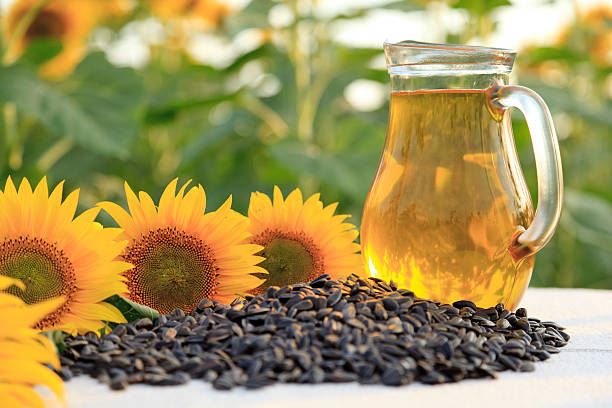
Sunflower seeds on the market fall mainly into two categories. Confectionery sunflower seeds are large, with thick hulls – the kind we snack on. Their whole-seed oil content is about 20-30%. Oil-type sunflower seeds are small, with thin hulls, and the whole seed can have an oil content as high as 40-54% – they are specifically bred for oil extraction.
For oil-type sunflower seeds, the hull percentage is typically around 20-23%, while the kernel (dehulled seed) can contain 40-67.8% oil. The oil content of whole seeds directly determines the feasibility of pressing – screw oil presses require raw material oil content above 10%, which sunflower seeds comfortably meet.
2. Advantages and Disadvantages of Pressing with Hulls
Advantages: Oil-type sunflower seeds are small and the hull-kernel space is compact, making dehulling relatively troublesome. Pressing with hulls eliminates the need for dehulling equipment and processes, reducing initial investment and simplifying operation. For small-scale start-up projects, this is indeed a convenient choice. In addition, sunflower seed hulls contain a certain amount of wax (about 60-85% of the total seed wax content). Under low-temperature conditions, these waxes tend to precipitate, causing the finished oil to become cloudy. Retaining some hulls during pressing can actually improve the oxidative stability of the oil.
Disadvantages: Sunflower hulls themselves have a very low oil content (only 1-2%). During pressing, they can adsorb some of the already expressed oil, reducing the actual oil output. Research data show that the oil yield from dehulled pressing (31-35.1%) is significantly higher than that from whole-seed pressing (about 19.7%). Moreover, pressing with hulls produces crude oil that is darker in colour and contains more impurities, placing a greater burden on subsequent filtration and refining.
3. The Value of Dehulled Pressing
The benefits of dehulled pressing are concentrated in three areas:
Oil yield: After dehulling, the kernels have a high oil content, and the whole-seed oil yield can be increased to 35-45%. For large-scale processors, even a few percentage points of yield difference directly affect profit margins.
Oil quality: Removing the hulls significantly reduces crude fibre and pigment content in the oil, resulting in a clearer colour and purer taste. Dehulled pressing also reduces heat build-up during pressing, helping to preserve the oil's natural flavour.
Meal value: Sunflower seed meal is a high-quality feed ingredient. After dehulling, the meal has higher protein content and lower crude fibre content, commanding a higher market price. If you plan to sell the meal as a co-product, dehulled pressing is clearly more cost-effective.
# Simple sunflower seed production line
4. Comparison: Pressing with Hulls vs. Dehulled Pressing
|
Criteria |
Pressing with Hulls |
Dehulled Pressing |
|
Equipment investment |
Low (no dehulling unit) |
Higher (requires dehuller + kernel-hull separator) |
|
Oil yield |
Relatively lower (approx. 35-40%) |
Relatively higher (approx. 36-45%) |
|
Crude oil colour |
Darker |
Clearer |
|
Meal quality |
High crude fibre, lower protein |
Low crude fibre, higher protein |
|
Post-treatment |
Heavier filtration/refining load |
Lighter filtration/refining load |
|
Suitable scenarios |
Small start-up projects, oil-type seeds |
Medium-large scale, projects with high quality requirements |
5. Choosing Between Cold Pressing and Hot Pressing
Beyond the hull-or-no-hull decision, another critical choice is cold pressing vs. hot pressing.
Hot pressing is the choice for most sunflower oil plants. The seeds are roasted to 130-150 °C before pressing, resulting in higher oil yield (residual oil can be kept below 8%) and a more pronounced roasted flavour. When sunflower seeds are hot-pressed with hulls, the waxes in the hulls partially dissolve at high temperature, increasing the wax content in the crude oil and darkening its colour – subsequent refining and dewaxing are needed for a good appearance. If the crude oil from hot pressing with hulls develops white flocculent sediments when cooled, that is normal wax precipitation, which must be removed by refining and dewaxing.
Cold pressing does not require a roasting cooker; the seeds are pressed directly, making operation simpler. Cold-pressed sunflower oil has a clear colour and retains natural nutrients. However, the oil yield is about 2-4 percentage points lower than hot pressing, and it typically requires two or three passes to achieve satisfactory extraction, which increases energy and time costs. Cold pressing can be done with hulls; operation is relatively simple, and the hulls have little impact on yield.
6. How to Choose the Right Process for Your Project?
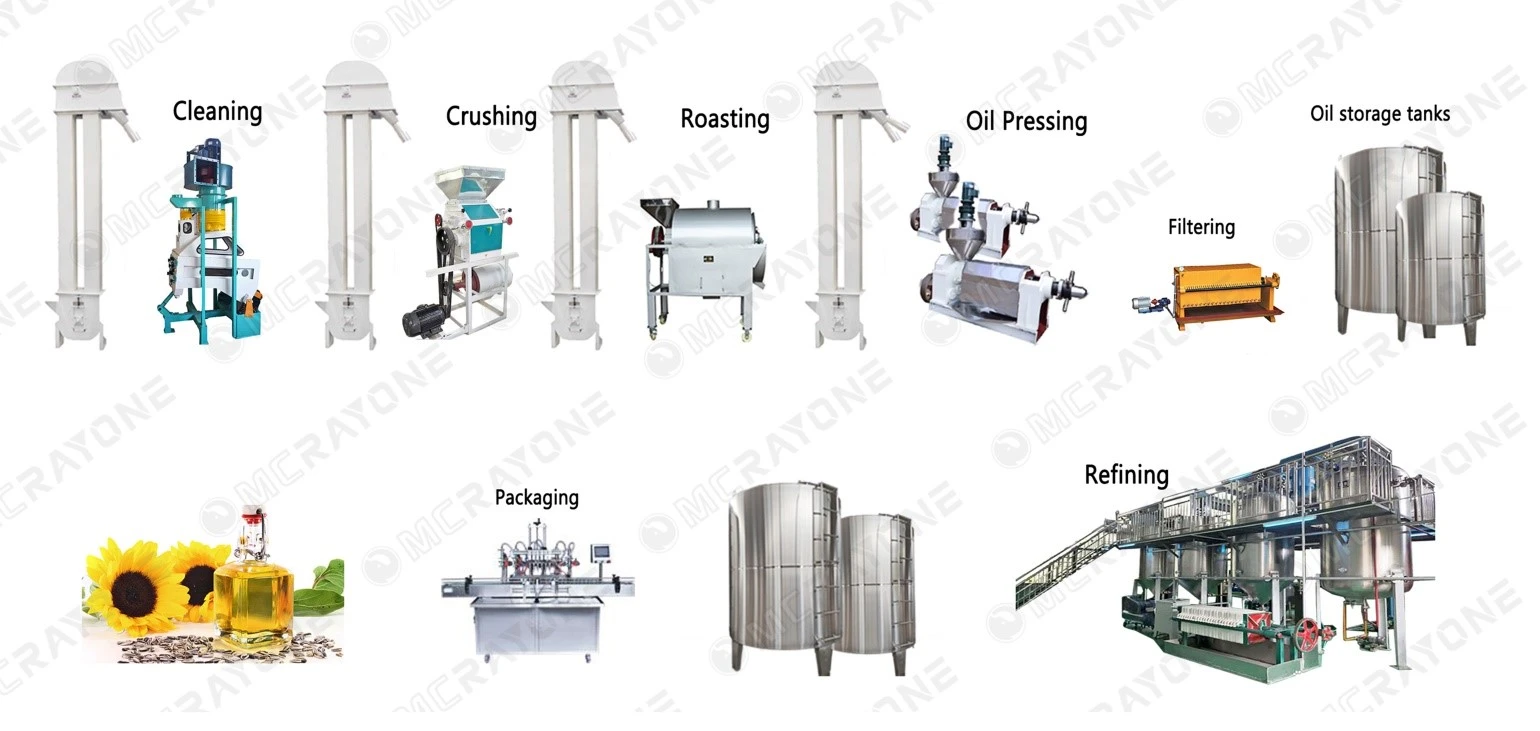
If your project is small-scale with limited capital: Consider starting with hot pressing with hulls or cold pressing with hulls. Cold pressing with hulls eliminates both the roaster and dehulling equipment, giving the lowest investment and simplest operation. Hot pressing with hulls requires a roaster, slightly higher investment, but better oil yield.
If you prioritise oil yield and economic efficiency: Dehulled hot pressing is the most efficient option – residual oil can be below 8% in a single pass. Although you will invest in dehulling equipment, the higher oil yield and better meal value will pay back the investment faster over the long term.
If you target the premium oil market: Dehulled cold pressing is worth considering. The finished oil has a clear colour and pure taste, commanding a better price. Cold-pressed oil cake does not suffer protein denaturation – if your target market values cake quality, cold pressing is also a preferred option.
# Sunflower seed production line (with refining)
7. Practical Considerations for Production
Regardless of your chosen route, here are a few key points worth noting in actual production:
Moisture content before pressing: For hot pressing, keep moisture around 2%; for cold pressing, control it around 10%. Too much moisture will hinder machine operation; too little will reduce oil yield.
Barrel temperature: Preheat the press to about 90 °C before feeding. If the barrel temperature is too low, the oil will not flow well and the yield will noticeably drop.
Handling hard contaminants: Sunflower seeds may contain stones, metal bits, and other hard objects that can seriously damage the screw and rings. It is advisable to install a simple cleaning screen or magnetic separator before pressing.
Oil-type variety advantage: If your local supply is dedicated oil-type sunflower seeds, the whole-seed oil content is high, and pressing with hulls will be significantly more profitable than using confectionery seeds. Knowing the quality of your raw material is the first step to making the right process decision.
There is no single "correct" answer for sunflower seed pressing – the key lies in combining your raw material quality, target market, and production scale. By understanding the characteristics of pressing with or without hulls, and cold vs. hot pressing, you can make a judgement based on your actual situation and find the route that suits you best.